
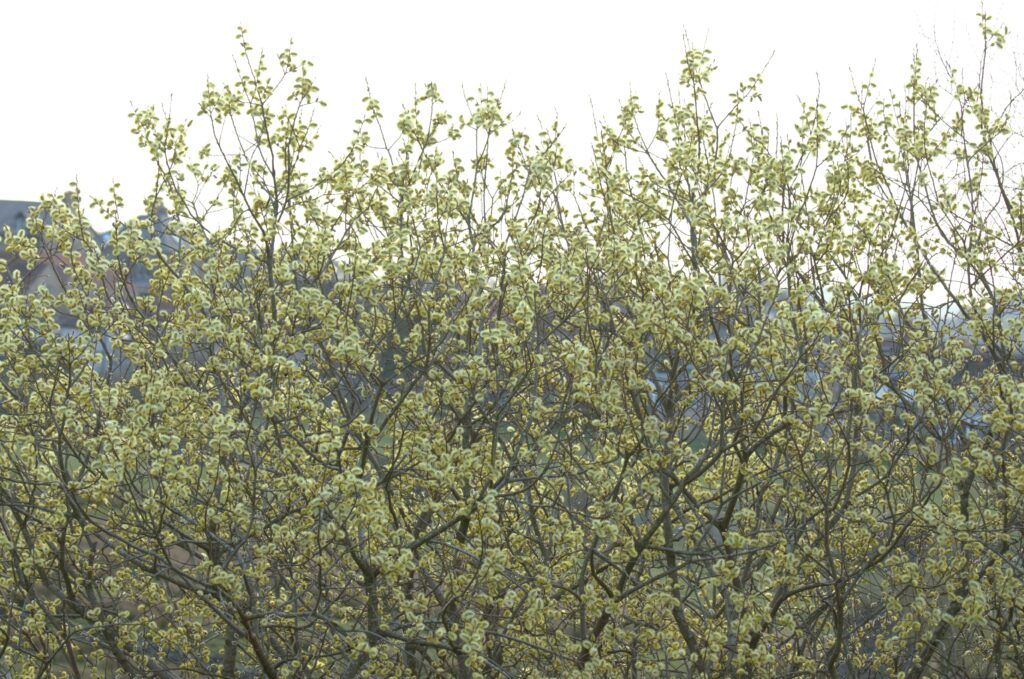
Hogshaw Nature Reserve may be on the old tip, but nature applied a secret medicine at an early stage to transform this once-polluted ground into a place fit for abundant wildlife. It is the willow tree.
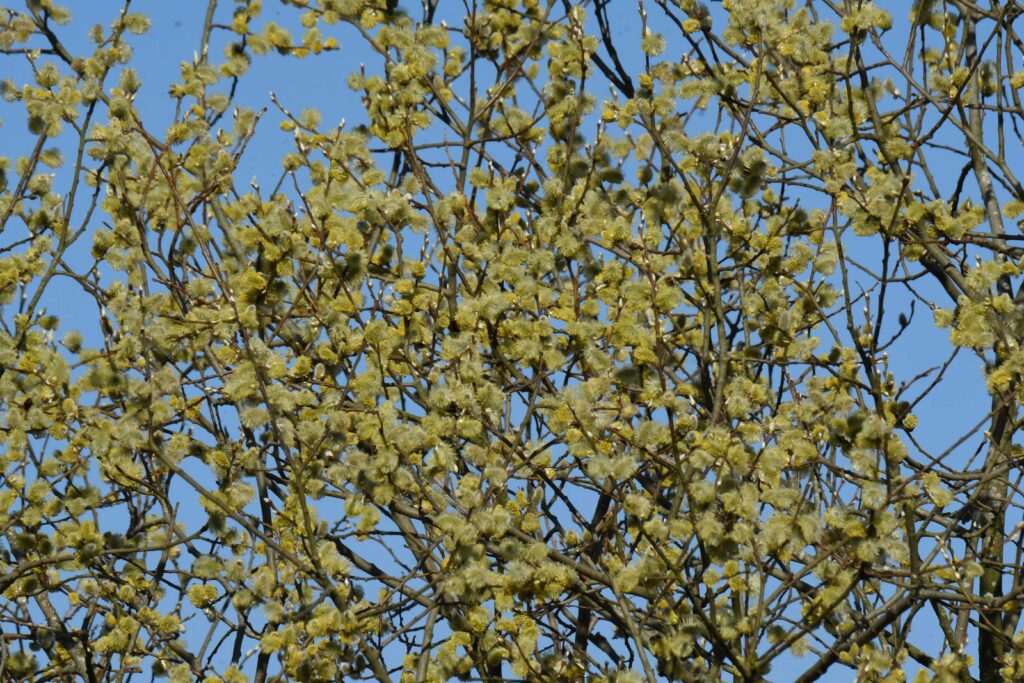
If you visit Hogshaw, you’ll see these rather low-growing trees with multiple stems spiring outwards to create a dome of foliage in summer. In spring, willows are unmistakable because the buds – the ‘catkins’ that give ‘pussy’ willow its common name – create these enormous soft lemon-yellow spheres. They are important food sources for insects at this season.
Watch out for them in the next few weeks: they are one of the most heartening signs of better times and are often alive with queen bumblebees.
Most of the trees at Hogshaw are probably grey or goat willows (another name for both is ‘sallow) but no one has surveyed the wood and there are at least 20 willow species in Britain. The trees are well known for their promiscuity and there are a further 70 hybrids: so, the full site could have many different willow forms.
Another little appreciated aspect of this wonder tree is that it is among the friendliest to other wildlife. More invertebrates live on willows (452 species) than on any other trees, including their closest contenders the oaks (423). Incidentally, the third most important British tree for supporting other life is birch. This is the other predominant species at Hogshaw and it is the presence of both super-sources of food that help make the reserve so important.
In his glorious new guidebook Trees of Britain and Ireland, Jon Stokes further points out that 160 lichen species thrive on willows. So, we have much to learn about the full range of life at Hogshaw. This summer we are planning a bio-blitz, a search for the other creatures and plants that live at the nature reserve. We hope you will join us and watch out for our upcoming posts on the event.
Let’s look finally at why willows were such a beneficial tree for an old rubbish dump. Willows have a capacity for ‘cleaning up’ polluted soils and water, a process known as phytoremediation. They are able to absorb heavy metals, excess nutrients and pesticides from contaminated environments. They are thus Nature’s clean up team.
A remarkable example of willow’s beneficial impacts occurred at a botched hydro-electric dam project that had been built during the Soviet period in southern Ukraine. When the Russians bombed the dam in 2023, they caused a massive flood and exposed the dam basin, which was contaminated with heavy metals. The Ukrainians were worried that the exposed dust would blow across the region and wreak havoc, but no one had reckoned with willow to sort out the human mess. The basin sprouted willows and within 12 months the place was thick with three-metre-tall woodland. The result: no contamination. But a great deal more wildlife.
Willows are not dramatically tall or famous for their stature and age. But they are one of Nature’s super powers. We are blessed to have so many at Hogshaw.
By Mark Cocker