
Hogshaw Nature Reserve approached an important milestone this summer with the recording of our 1000th species in the area. Hogshaw is fabulous for wildlife and one important measure of that is its diversity. A thousand species of plant and animal are testimony to its richness but they are a perfect argument for the site’s recognition as a nature reserve.
Lucy Ball at the Buxton Advertiser kindly helped us to celebrate our campaign One Thousand Good Reasons To Save Hogshaw with an article in the newspaper about its wildlife. In this season of heatwaves, we thought it a good idea to celebrate some of those Hogshaw citizens beginning with the letter H.
Always a July highlight at Hogshaw is one of its most enduring residents – broad-leaved helleborine. These beautiful orchids are scarce in Derbyshire and the colony at Hogshaw is one of the largest and most reliable in Buxton. The plant has actually spread since it was first found.
The flowerheads form long heads with multiple blooms that emerge in ascending sequence. The orchid family is one of the most diverse and evolved of all plant groups. Unlike most flowers, which produce pollen as a liberal loose dust that coats hairs on the bodies of pollinating insects, helleborines concentrate it in two sticky balls called pollinia.
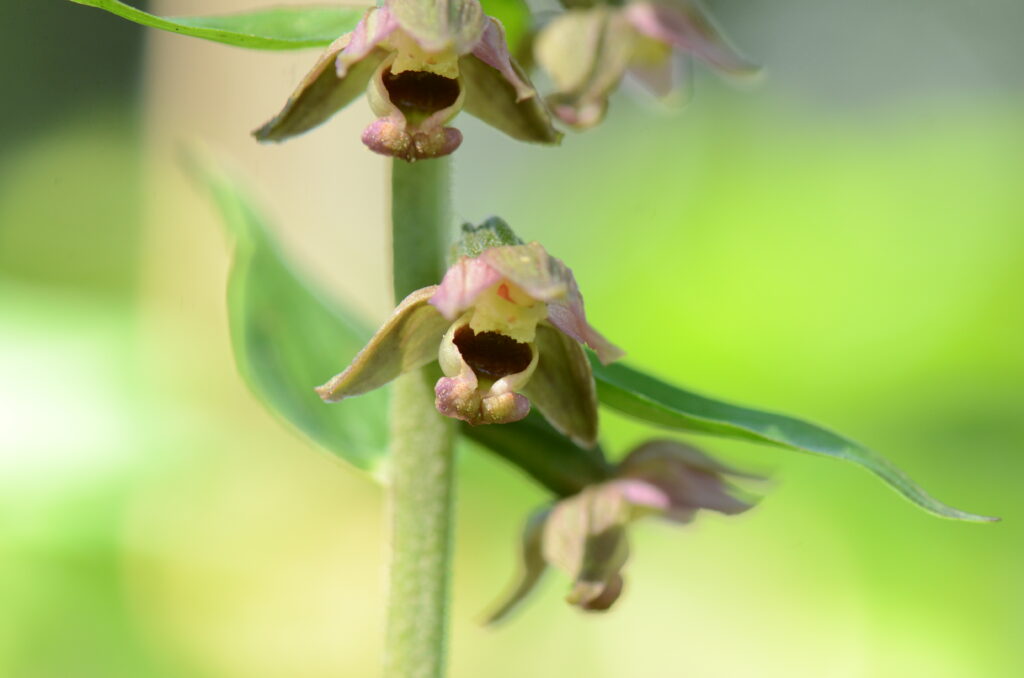
These tiny specks of fertility are shaped rather like a miniature sausage and when an insect calls to drink nectar, the pollinia break off and stick to the head of the unwitting visitor. It then flies away with the pollen glued to it like an extra pair of antennae. When it visits another receptive helleborine the polllinia are transferred to the precise part of the second flower. In the case of broad-leaved helleborines much of this reproductive work is done by wasps. Given the success of the colony at Hogshaw, we know that this exotic reproductive strategy has been working perfectly for the last 60 years.
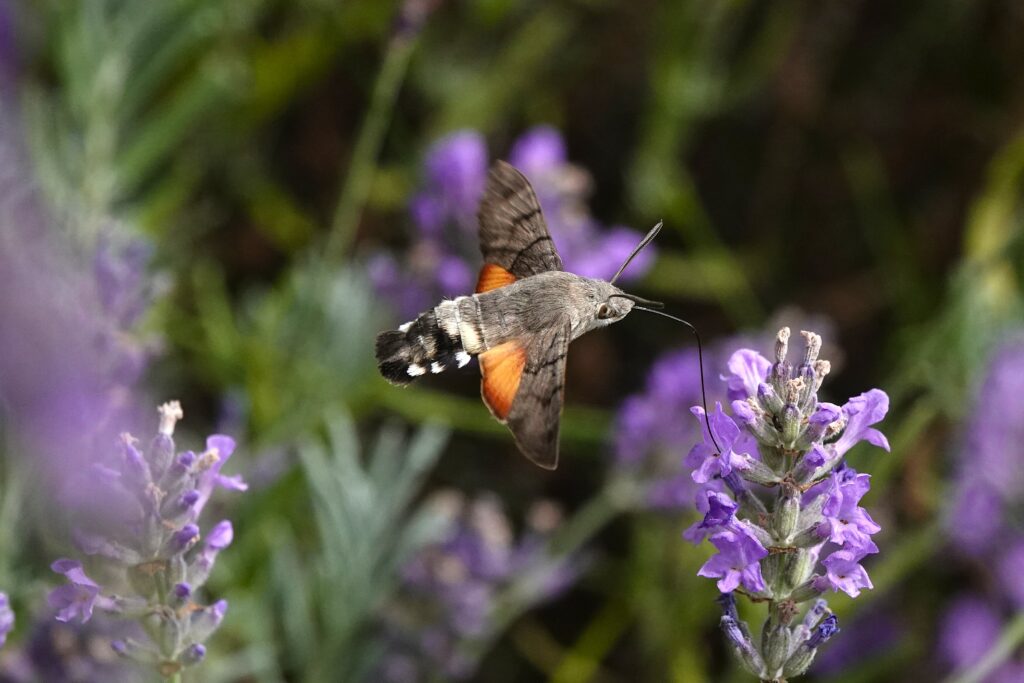
One of our most recent new species is hummingbird hawkmoth.
It is not a native in this country and it is exceptional for being a day-flying species. It breeds in southern Europe but in this hot summer many have come north and are visiting gardens and other flower-rich habitats all over Britain.
The unusual name celebrates the way it hovers hummingbird-like as a blurry shape over some long-throated flowerhead. Buddleia is a favourite food species. The proboscis, normally rolled up as it flies at top speed from bush to bush, unfurls when it starts feeding almost like a bird’s beak. This enormous mouthpart is longer even than the insect’s entire body. It is no wonder some people mistake it for a real hummingbird.
Two of Action for Hogshaw’s stalwart supporters are Steve and Lyn Orridge. They live just above the site and have recorded 618 species in their garden moth trap, a quarter of all the moths found in Britain. The garden may be outside our area but the species are not and are almost certainly flying there from the habitats in wider Nunsbrook Dale.