
Friend of Hogshaw’s Terry Richardson asks local naturalist Steve Orridge, who has been living on the fringes of Hogshaw for three decades, why the area is so important for both flora and fauna and the local community.
How long have you been taking an interest in Hogshaw and its flora and fauna?
I came into it quite late really, as Lightwood was my favourite site to go to because of its range of habitats. But over this last two years or so I’ve really been looking at Hogshaw, recording species, spurred by the fear of losing it. It’s been there all this time, but we hadn’t done any proper surveys and realised it was time to highlight just how important it is.
Who has been doing the surveying?
It’s been mostly my wife and me but there are other people who have been checking out the flora. We have been surveying Lightwood since it was put up for sale in 2016 and I’ve invited several experts to add to the list. So far, we have recorded over 1,100 species, but when Hogshaw came under threat we realised that we needed to start surveying there. I began recording whatever I found and sent in my records to whoever would have them. There are County recorders for various groups (Butterflies, Dragonflies, Birds, Flora, etc). I joined iNaturalist around 3 years ago. Through iNaturalist I send in photographs of species from Hogshaw. Once they reach Research Grade they move over to iRecord and eventually make their way on to the National Biodiversity Database which can be used to aid wildlife conservation.
Why is Hogshaw such an important site for nature?
Because it’s been left alone! Brownfield sites such as Hogshaw are a valuable refuge for our wildlife when nature is given a chance to reclaim the space. It really upsets me when developers come along and say ‘Well, it’s a brownfield site, we’re going to improve it’. Improve it for who? Certainly not the wildlife. We’ve already discovered 300 species down there, and I’m sure there’s plenty more.
How important is Hogshaw in comparison to other green spaces and natural habitats in Buxton?
In terms of butterflies, I think it’s more relevant than Grinlow, which is a bit of a monoculture, all beech trees and not much else. Last year we recorded nearly twice as many butterflies in Hogshaw than we did in Grinlow. Hogshaw was brilliant before they put the rail extension in because that whole area was heaving with garden warblers, blackcaps and whitethroats. Unfortunately, a lot of habitat was destroyed for the railway.
Hogshaw used to be a railway marshalling yard and later the town tip. What does it say about the power of nature that it is now such a valuable green space?
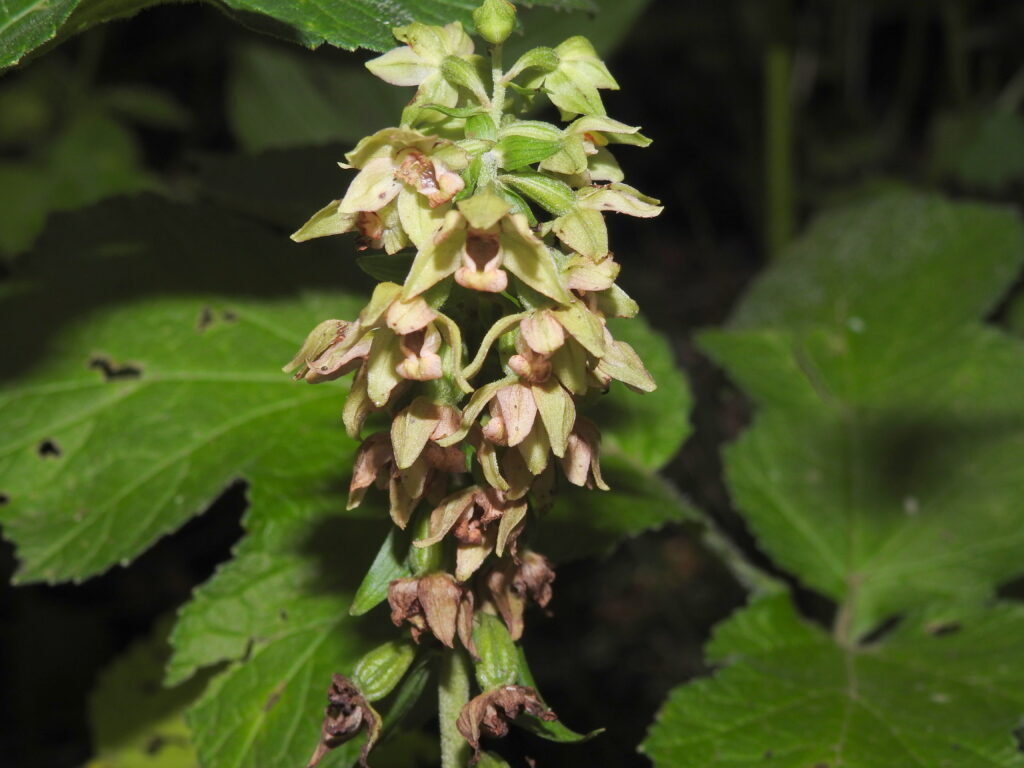
Give nature time and it’ll make a comeback. Just leave it alone! We’ve got the broad leaved helleborine in Hogshaw, which is an indicator of ancient woodland. There are no wood anemones or even bluebells as far as we know, but it is a wildlife corridor, allowing different species to make their way into Buxton. We have brown trout in the stream and we’ve even had goosander there. Leave nature to it and it’ll get on with it.
How many different species have you discovered in Hogshaw? What was the most surprising and what was your favourite find?
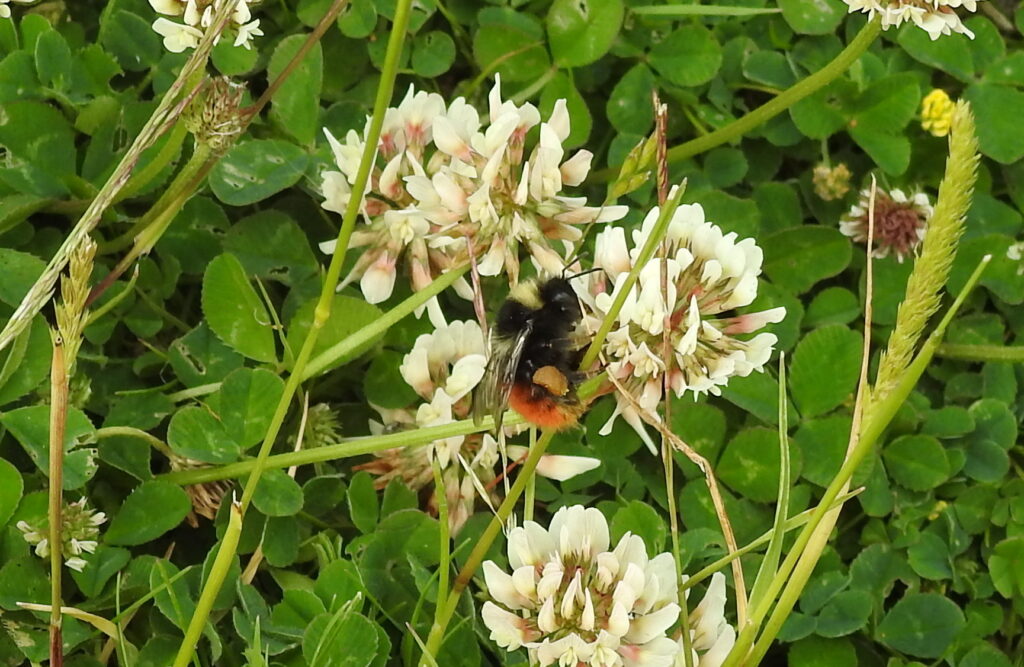
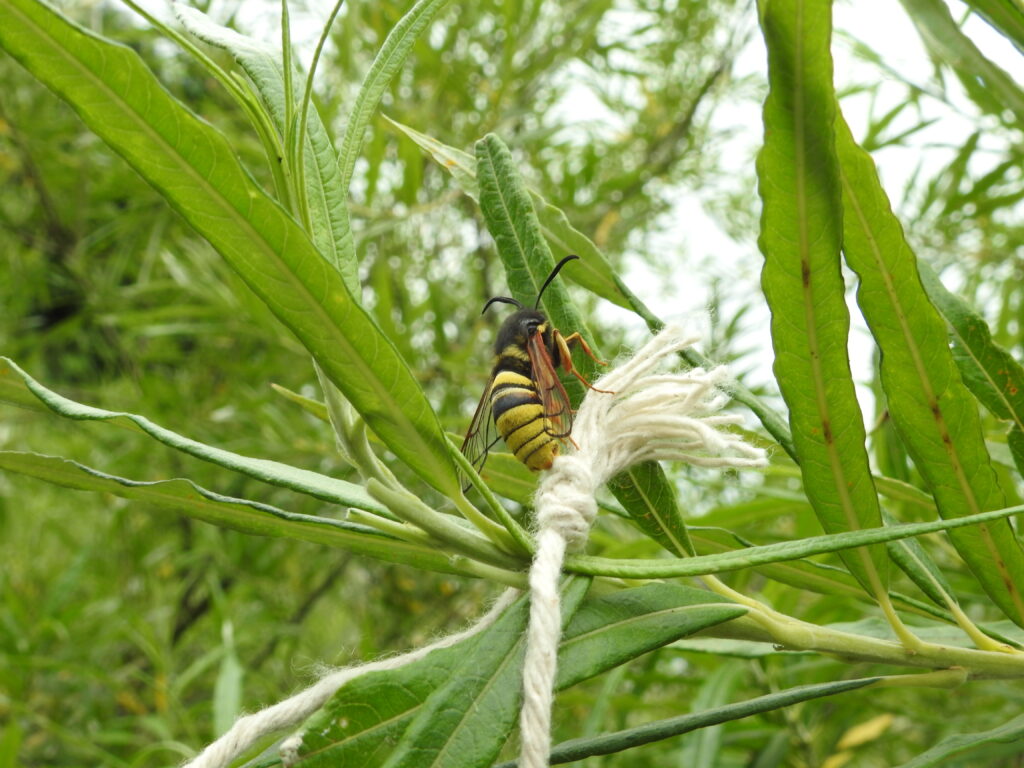
Last year, my favourite find was the Lunar Hornet moth. The larva feed on willows for one or two years. When they hatch the female releases a scent which attracts the males. We took some pheromones down there which mimics the scent of the females. Four males came to the lure. The year before it was the Bilberry bumblebee. I was coming back from a long walk round Cunningdale and Woo Dale. As I was heading home through Hogshaw I heard a loud buzzing on a patch of clover. It was swarming with Bumblebees. And amongst them I counted about 30 Bilberry Bumblebee, a declining species. It was amazing. I got straight onto Bumble Bee Conservation Trust and told them all about it and they came down. It was an exciting moment as they are an iconic species and not that common. I don’t think we had those sorts of numbers last year because there wasn’t so much clover – it all depends on the weather.
It is a popular site for dog walkers and others to enjoy. Is there anything they can do to help collect information about nature on the site?
It’s always good if people are interested in nature. I’m trying to push iNaturalist, it’s something you can download on your phone, it’s just an app. Take a photo of what you see and post it on the site. A photo is always good, it’s real evidence of a species. Unfortunately, unless the recorder is well known, the experts cannot accept a record unless there is physical evidence or a photo. I encourage everyone who walks around Hogshaw to stop, look and appreciate the nature that Hogshaw nurtures.
How important are sites like Hogshaw for nature and for people at a time when climate breakdown is threatening our world?
It is very important. At a time when we are losing our wild spaces to development, Hogshaw can be a place of calm and a little oasis for wildlife. And the playing fields are a safe green space for our children to enjoy.
Are there any species you would like to see introduced to Hogshaw that have yet to establish themselves there?
I am not entirely sure what we have now. There was some planting of young trees after the new sidings were installed but they don’t seem to be doing too well. I don’t know if they have been managed since they were planted. A few of them are looking the worse for wear. You have to be wary of just planting stuff if you’re not going to look after it. I know I’ve said just leave nature alone, but sometimes it does need a bit of help. We recently planted Oak, Rowan and Downy Birch in Lightwood. We are doing OK for Birch in Hogshaw but there is probably room for the other two. All our common plants are good for wildlife. Nettles and thistles aren’t very pretty but they are home to lots of species of insects – which then feed our birds.
People talk about Hogshaw being a wildlife corridor – what does this mean exactly?
If you have a small island in the middle of the ocean, you end up with little genetic diversity and a kind of inbreeding which produces weaknesses. It’s all about spreading the genes, and that’s why wildlife corridors, which allows wildlife to move more easily, is crucial. I mean birds can fly from one patch of habitat to another to an extent, but for mammals it’s not so easy, even insects and pollen require wildlife corridors.
How would you like to see Hogshaw develop over the next ten years in terms of its flora and fauna and as an amenity for the public?
It’d be lovely if we could have a pond in Hogshaw. If you could divert the brook and create one, we’d get a whole new load of species down there. It’d be an invaluable resource, providing a habitat for frogs, palmate newts, smooth newts and so on, as well as insects such as dragonfly. We’d have to keep the dogs out of the water, though. Those anti-flea collars can put toxins into the water which can kill everything in the pond if you’re not careful. Perhaps we could have more wildflowers too – they prefer soil that is not very fertile so the area where they capped the ‘waste’ from the new sidings could be perfect for wildflowers such as orchids.
Steve Orridge: A brief biography by the man himself
I have always been interested in the natural world but since my retirement I have had more time to get involved. I have run a moth trap in our garden for the last 30 years and have been participating in butterfly surveys for over 10 years. Since joining the Buxton Biodiversity group, I have been an even more active recorder of our wildlife and have contributed to the iNaturalist project where we have now recorded over 2500 species in the Buxton area. Our aim is to highlight the diversity of species that we are so lucky to have around Buxton and highlight how important it is to preserve our special places for people and wildlife.